Field research

Apart from the developed drawings of the dormitory and family cottages, this week has seen progress on the materials... 

On Tuesday we went to pay a visit to the executive director of Mulanje Conservation Trust in Mulanje, to learn more about the bamboos and other trees and plants that we could get from him, as well as SSBs and tiles that were used for the offices there. Being himself the son of an architect who worked here, he's pretty aware of all this.

beautiful way among the tea estates of Mulanje
some tiles had to be replaced as they were broken by the wrong placement of solar panels

And on Friday, another architectural visit, this time to Mr Sonke, a very special architect-engineer who keeps "engineering" in the true manner ! He's living in the most special house I have ever been to, a "football" house that looks more like a water tower than a home ;) But it's actually very cosy inside, and of course the view is magnificent. 
The "football house" seen from the road to the airport... I've actually taken this picture last year, wondering what that structure was
 
 
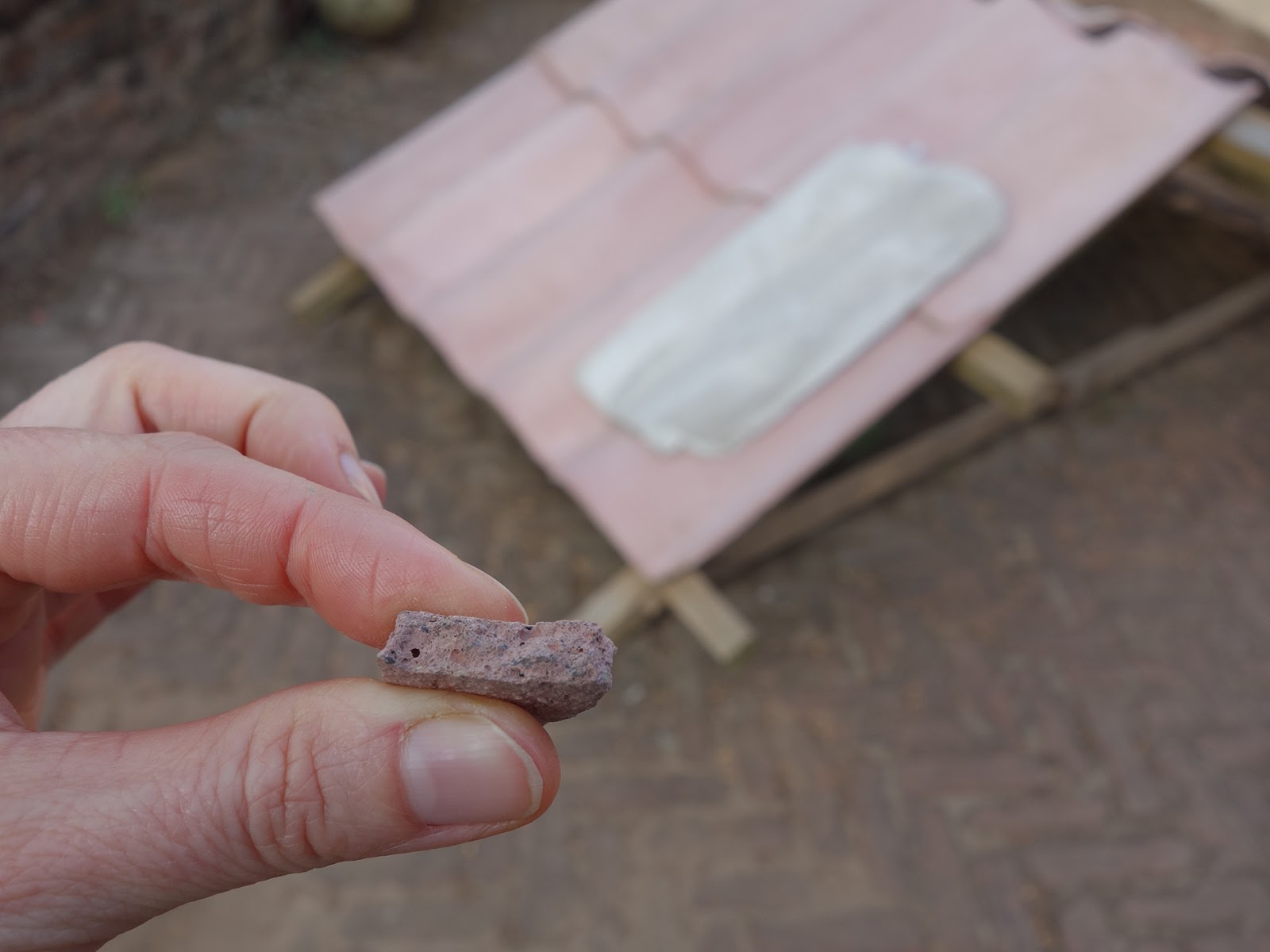
Mr Sonke re-launches the production of roof tiles that are very interesting for us - indeed for months I've been looking for a second good material that we can use, the 1st one being thatch. Mr Sonke's tiles are made of "micro-concrete", using stone quarry powder and micro gravel. 

The tiles are light pink when new, but darken quite fast

The placement of the solar panels directly as the roofing is also something we want to do for one of the structures

Comments

Popular posts from this blog

Week 5 : The launch of CSEB making

So, yeah, this week saw the start of the production of our CSEB - Compressed Stabilized Earth Blocks, also called "SSB" for Stabilized Soil bricks, or BTC in French, for Blocs de Terre Comprimée (manque un S pour stabilisée mais bref).  They are much more eco-friendly than the fired bricks (using a looot of wood to get cooked) or concrete (using a loooot of (imported) cement), as these blocks should count only 5% of cement for the stabilization, and don't need any plaster or paint or any other layer on them at the end to be confortable and beautiful. So some soil has already been extracted and sieved, and kinda analyzed ( a bit too roughly unfortunately), we had a bag of cement ready, some water nearby, a large area for the curing was prepared, the machine was assembled and we were ready to start testing ! We made our first blocks on Monday afternoon, guiding the guys for the dry mixing, the wet mixing, the steps for the compression, the handling on the block...

Chantier au jour le jour

I've already talked about the difficulties to plan anything ahead here last year. On Wednesday late afternoon, the person in charge of the site while the boss is away informs that he will have to be away for the 2 coming days, as he has to attend a relative's funeral. Ok, I am the one remaining, I will then spend Thursday and Friday on site.  I'm also waiting for more info on the gardens to finish setting out the future alley. But the permaculture director just messaged me : she's been sick all night and won't be able to go anywhere today.

Week ...? - 17/01 Preserving the trees

When you want to preserve the trees of the site you're building on, you have to go with some golden rules...  One of these is "you do not build too close from the trees", or else you'll damage the roots, and the tree you wanted to keep will die shortly... So the challenge was to build our stone boundary wall without damaging the roots of the beautiful Tree-on-the-Rock that is standing just at the limit of the site. And we did it ! It's such a nice place and will be perfect to come to meditate about the resilience of beings around us...